
In modern power transmission and distribution networks, insulators are essential for ensuring both electrical insulation and mechanical support. Among the most widely used types are glass insulators and porcelain insulators. While both serve the same fundamental purpose, their materials, performance, and applications differ significantly. Understanding these differences helps utilities, EPC contractors, and project managers choose the most suitable insulator for their specific needs.

What Are Glass Insulators?
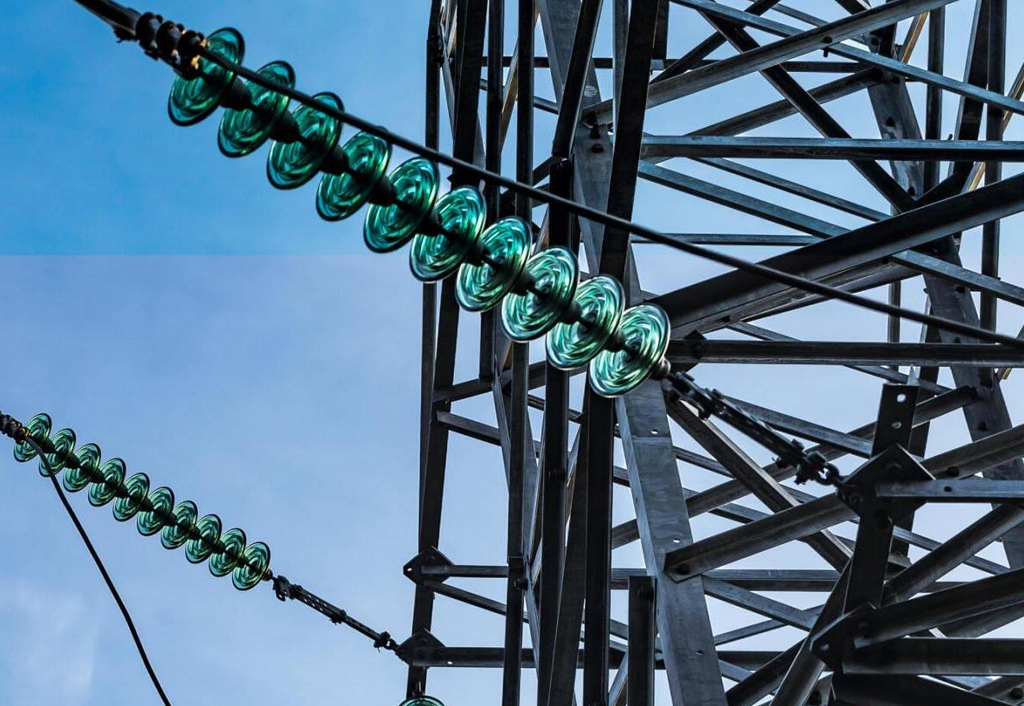
Glass insulators are made of toughened (tempered) glass, designed to provide excellent dielectric strength and mechanical reliability. They are transparent, smooth-surfaced, and resistant to contamination build-up. With decades of proven performance in high-voltage transmission lines, glass insulators are known for their zero-defect recognition feature: when damaged, they shatter visibly, allowing quick identification and replacement during line inspections.
What Are Porcelain Insulators?
Porcelain insulators are manufactured from clay, quartz, and feldspar, fired at high temperatures and glazed for durability. They have been used for more than a century in electrical systems and remain reliable for medium- and high-voltage applications. Unlike glass, porcelain insulators do not shatter visibly when damaged, requiring testing tools to detect internal defects.
Key Differences Between Glass and Porcelain Insulators
1. Electrical Performance
Glass Insulators: Offer superior electrical insulation, self-cleaning surfaces, and stable performance in polluted or coastal environments.
Porcelain Insulators: Provide good insulation but are more prone to contamination build-up, often requiring RTV coatings or frequent cleaning.
2. Mechanical Strength and Durability
Glass: Stronger tensile strength, excellent resistance to sudden temperature changes, and durability against wind, ice, and thermal shock.
Porcelain: Reliable mechanical properties but less resistant to thermal shock, making it more vulnerable to cracking.
3. Maintenance and Service Life
Glass: Typically lasts 30–50 years, with reduced maintenance thanks to zero-defect recognition.
Porcelain: Service life of 25–40 years, but requires more frequent inspection and maintenance.
4. Cost Considerations
Glass: Lower unit cost and lower lifetime maintenance cost.
Porcelain: Higher unit cost and higher long-term operational expenses.
Advantages of Glass Insulators
High mechanical strength and durability.
Zero-defect recognition for fast inspection.
Smooth surface with self-cleaning properties.
Long service life and reduced maintenance costs.
Advantages of Porcelain Insulators
Long history of proven use in electrical systems.
Strong mechanical stability.
Compatibility with legacy electrical infrastructure.
Applications
Glass Insulators:
Best suited for high-voltage and ultra-high-voltage transmission lines, as well as polluted, coastal, desert, and icy regions where reliability and easy inspection are critical
Porcelain Insulators:
Commonly used in medium-voltage distribution networks, older substations, and projects requiring compatibility with existing porcelain-based systems.

Conclusion
Both glass and porcelain insulators have their place in the global power grid. Glass insulators stand out for their durability, self-cleaning performance, and cost-effectiveness, making them the first choice for modern transmission projects. Porcelain insulators, however, remain relevant in medium-voltage and legacy systems where tradition and compatibility matter.


