
In modern power transmission systems, safe electricity delivery and reliable communication must go hand in hand. One product that combines both functions is the OPGW cable (Optical Ground Wire). But what exactly is OPGW, and why is it also called optical fiber composite overhead ground wire? Let’s explore its structure, purpose, and advantages in today’s high-voltage grids.
Understanding OPGW Cable
An OPGW cable is a specially designed conductor that combines two essential functions:
Grounding protection – It works as a traditional ground wire, shielding transmission lines against lightning strikes and short-circuit currents.
Communication channel – Inside the cable, optical fibers are embedded, enabling high-speed data transmission for grid monitoring, control, and communication.
Because of this dual function, OPGW is known as an optical fiber composite overhead ground wire, emphasizing its role as both a mechanical protector and a communication medium.
Composition of OPGW Cable

The OPGW cable combines optical fiber communication and ground wire functions in one robust design. Its structure includes several key components:
Aluminium-Clad Steel Wires – These form the outer layer, providing high mechanical strength and conductivity to serve as the ground wire for lightning protection.
Stainless Steel Tube – Positioned at the center, this tube safely houses and protects the optical fibers from external stress and environmental impacts.
Optical Fiber – The core of the OPGW cable, enabling high-speed data transmission for communication systems while sharing the same line with power transmission.
Gelly Filling – Special gel is used inside the stainless steel tube to cushion the optical fibers, preventing micro-bending and ensuring long-term stability and performance.
This integrated structure makes OPGW cables ideal for modern power grids, ensuring both reliable grounding and advanced communication capabilities in one solution.
Why Power Grids Use OPGW
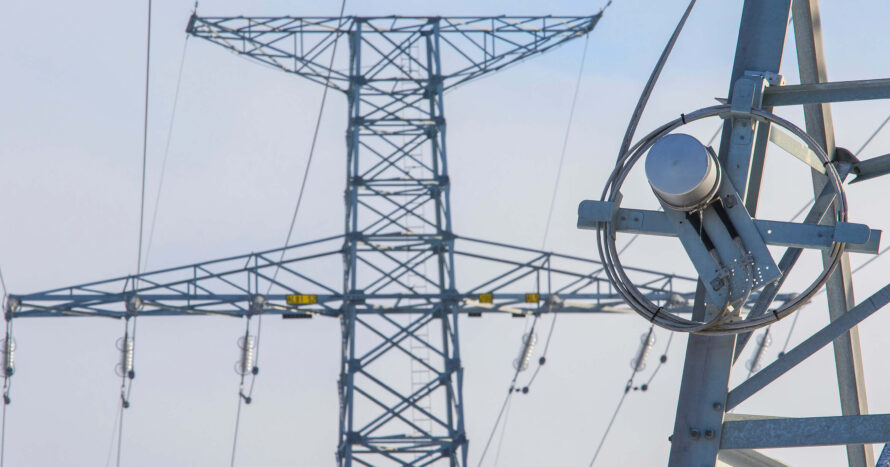
1. Lightning Protection
Like a conventional ground wire, OPGW protects transmission lines from lightning by safely channeling excess energy into the ground.
2. Data Transmission
The optical fibers inside the cable allow power utilities to integrate SCADA (Supervisory Control and Data Acquisition) systems, smart grid management, and real-time monitoring of line performance.
3. Durability and Reliability
OPGW cables are designed to withstand mechanical stress, strong winds, ice loading, and high temperatures, making them suitable for long-term outdoor use.
4. Cost Efficiency
By combining two functions—ground wire and fiber optic communication—OPGW reduces the need for separate infrastructure, saving costs in installation and maintenance.
Why Choose NOOA Energy’s OPGW Cable?

At NOOA Energy, our OPGW Cable solutions are built with precision engineering and global quality standards. By combining advanced materials with strict testing, we ensure cables that deliver:
High tensile strength for long-span installations.
Superior corrosion resistance for coastal and industrial regions.
Reliable fiber performance for uninterrupted communication.
Compatibility with IEC and IEEE standards, ensuring global project adaptability.
Our OPGW Cable products are already in service across Asia, the Middle East, and Africa, trusted by power utilities and EPC contractors for large-scale projects.
Conclusion
OPGW cables are more than just ground wires—they are the backbone of modern power grids, combining protection and communication in a single solution. With NOOA Energy OPGW, utilities gain both lightning safety and reliable fiber connectivity, ensuring their networks are stronger, smarter, and ready for the future.


