
In the modern power transmission system, hardware fittings (also known as line fittings or insulator fittings) are indispensable components. They are usually made of galvanized steel or aluminum alloy and are designed to connect conductors, insulators, and towers. Beyond connection, they must bear heavy mechanical loads and, in many cases, ensure good electrical contact.
Because of their critical role, the quality, correct selection, and proper installation of fittings directly affect the safety of transmission lines. Even one failed fitting could cause a line fault, disrupting power delivery.
Categories of Power Line Hardware Fittings

Power line fittings are generally classified by performance and application. Below are the main categories:
1. Tension Clamps

These fittings are used to fix conductors or ground wires on strain insulator strings, playing an anchoring role.
Bolt-Type Tension Clamp – Simple and widely used.
Wedge-Type Clamp – Ensures firm grip with a self-tightening design.
UT-Type Clamp – Often applied to lightning protection wires or guy wires.
2. Suspension Clamps

Suspension clamps fix conductors or ground wires on suspension insulator strings or brackets, allowing conductors to hang securely.
Double Conductor Suspension Clamp
Fixed Suspension Clamp
Rotating Center Suspension Clamp
3. Splicing Fittings

Splicing fittings are used to join conductors or ground wires, including jumper connections at strain towers.
Splicing Tube – Provides a seamless conductor connection.
Parallel Groove Clamp – Allows branch or parallel connections.
Reducing Parallel Groove Clamp – Used for conductors of different sizes.
4. Connecting Fittings

Also called link fittings, these connect insulators into strings or link fittings with one another.
Ball-Eye Links
Yoke Plates
Clevis with Socket Plate (CGU Type)
5. Protective Fittings

Protective fittings ensure long-term stability and protect against damage.
Corona Rings – Equalize voltage on insulators.
Weights and Hammers – Prevent insulator strings from pulling out.
Vibration Dampers, Spacers, Armor Rods – Reduce conductor vibration and mechanical wear.
Applications in Real Projects
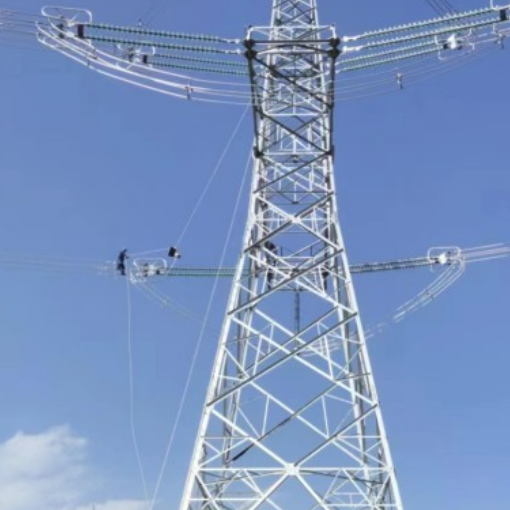
At NOOA Energy, our hardware fittings are designed to meet IEC standards, ensuring compatibility with global power transmission projects. They are widely applied in:
High-voltage transmission lines
Substations
Telecommunication networks (OPGW & ADSS cables)
Renewable energy projects
Our fittings are hot-dip galvanized for maximum corrosion resistance and tested to endure both mechanical and environmental stress. Together with our glass and porcelain insulators, they form a complete solution for modern power infrastructure.
Why Quality Matters
Because fittings are directly responsible for both the mechanical safety and the electrical reliability of power lines, their failure can have serious consequences. At NOOA Energy, all hardware fittings are:
Manufactured from high-strength galvanized steel or aluminum alloy
Tested to withstand mechanical loads, corrosion, and weather conditions
Our fittings are widely used in high-voltage transmission lines, substations, and renewable energy projects, ensuring that power grids around the world operate safely and reliably.


